Developing a 2K approach
Turning pitcher’s counts into battles and refusing to give away at-bats.
Two strikes changes everything.
The margin for error shrinks, pitchers expand the zone, and the pressure to protect increases. For many hitters, this is where panic starts to set in. Swings become rushed. Decisions get reactive instead of intentional. Chase rates climb.
A good two-strike approach isn’t about survival. It’s about giving yourself the best chance to cover the most pitches possible.
At Hit Lab, we teach hitters to simplify the game in these moments.
Our favorite two-strike thought:
“You should never strike out looking on a fastball away.”
That single idea can transform how a hitter competes when the count gets tough.
Why Fastball Away?
With two strikes, hitters often feel rushed. Pitchers know this and try to take advantage by expanding the zone with breaking balls or elevated fastballs.
Looking fastball extended away does a few important things:
It Slows the Game Down
When hitters think “fastball away,” their eyes naturally stay deeper in the hitting zone. This allows them to see the ball longer and prevents the feeling of being sped up.
When hitters feel rushed, they chase.
When they stay calm, they make better decisions.
It Allows You to Cover the Most Pitches
When you’re prepared for a fastball away, you still have the ability to react to:
Fastballs middle
Fastballs inside
Breaking balls that start in the zone
Offspeed pitches left up
Because the ball travels further before the decision point, hitters gain valuable reaction time.
It Improves Your Plate Discipline
The goal with two strikes isn’t to swing at everything. It’s to recognize early, react late, and compete on anything close.
When hitters commit to fastball away, chasing the pitches that pitchers want them to chase gets reduced.
Physical Adjustments That Can Help
A good two-strike approach isn’t just mental. Sometimes small physical adjustments can make a big difference in helping hitters stay on time and in control.
These adjustments aren’t mandatory, but they can help increase your margin for error.
Choking Up
Choking up slightly on the bat can improve barrel control and help hitters get to tough pitches.
The goal isn’t to lose power — it’s to increase the chance of putting the ball in play.
With two strikes, a hard single is just as valuable as a home run.
Widening the Base
Some hitters benefit from widening their stance slightly.
A wider base can:
Improve balance
Reduce excessive movement
Help the hitter stay grounded through contact
This can be especially helpful when facing pitchers with higher velocity.
Simplifying the Load
Big movements create timing challenges. With two strikes, simplifying the process can help hitters stay on time. Being ready to hit earlier can also help with swing decisions.
That might mean:
A quieter leg kick
Loading Earlier
Less Hand Movement
A shorter, more direct move to the ball
The idea is simple: fewer moving parts means fewer things that can go wrong.
Shortening the Move to Contact
Two strikes is not the time for the biggest swing of the night.
The focus should be on quickness to the ball and adjustability, allowing the hitter to fight off tough pitches and extend the at-bat if necessary.
The Two-Strike Mindset: Be a Tough Out
Approach and mechanics matter, but the biggest difference between good hitters and great hitters often comes down to mindset.
The mentality with two strikes should be simple:
The pitcher is not going to beat you easily.
Every pitch should feel like a battle.
Being a tough out means:
Fouling off tough pitches
Taking chase pitches
Fighting to put balls in play
Forcing the pitcher to execute again and again
Pitchers love quick strikeouts. They love hitters who panic with two strikes.
What they hate are hitters who refuse to give the at-bat away.
The hitters who foul off three pitches.
The hitters who stay disciplined.
The hitters who turn a two-strike count into a full count.
Those hitters wear pitchers down.
What the Data Shows
One of the advantages our hitters have at Hit Lab is the ability to review their at-bats using tracking tools like Pelotero.
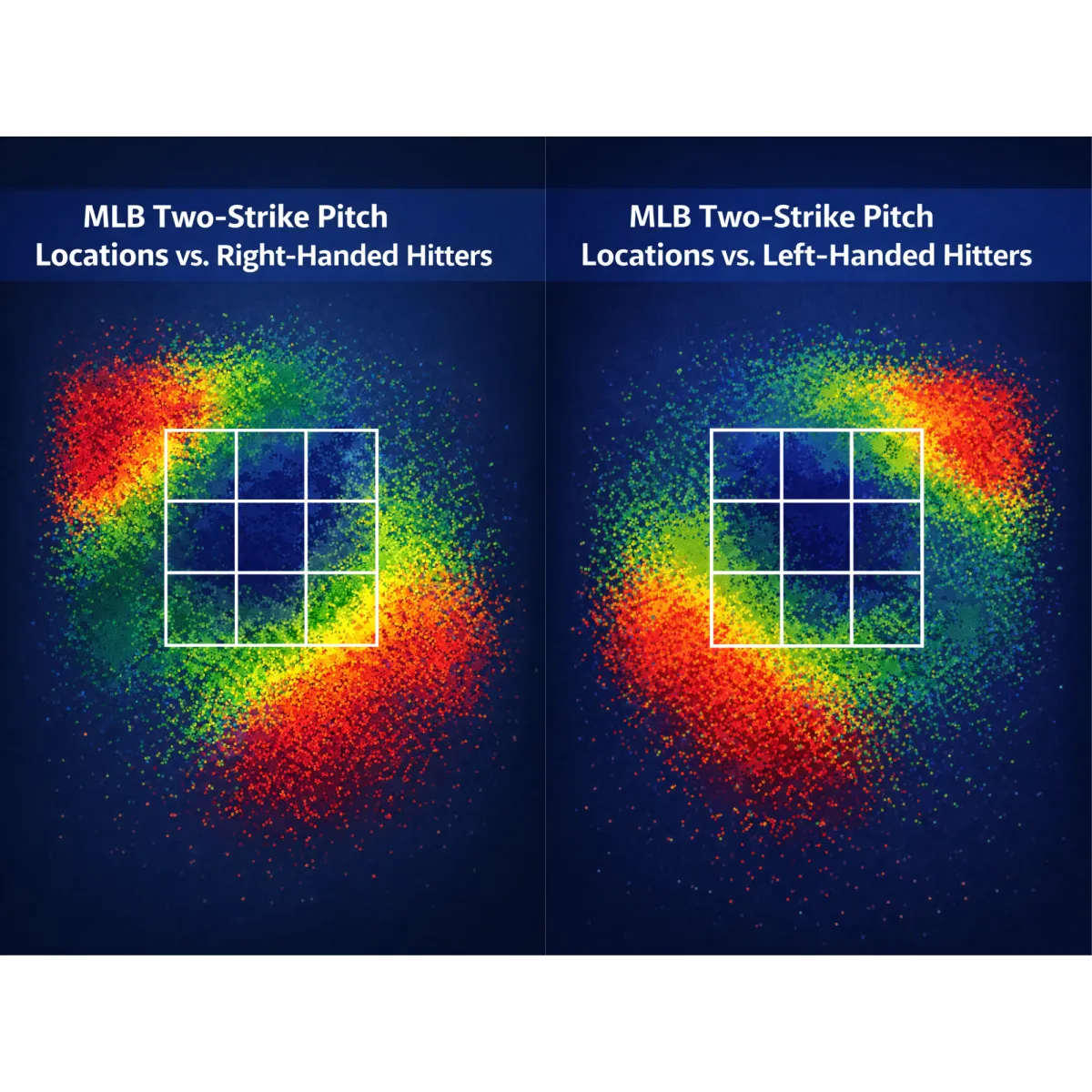
When we analyze two-strike counts, we often see common patterns:
Chasing breaking balls below the zone
Swinging at elevated fastballs above the zone
Rushed decisions caused by pressure in the count
But when hitters commit to a clear two-strike plan — especially looking fastball away — their decision making improves significantly.
Instead of guessing, they are reacting from a position of control.
Adjusting Within the Game
Like all approaches, this is not rigid.
There are situations where adjustments make sense:
A pitcher who never throws fastballs at two strikes
A pitcher consistently attacking inside
A scouting report that suggests a different pattern
But for the majority of at-bats, especially at the amateur level, fastball away provides the best default plan.
It keeps hitters calm, adjustable, and dangerous.
The Two-Strike Priority List
When hitters step into the box with two strikes, the plan should be simple:
Look fastball extended away
Track the ball deeper
Simplify the body if needed
React to anything close
Compete to put the ball in play
Two strikes isn’t about giving in to the pitcher.
It’s about making the pitcher earn the out.
Final Thought
Don’t treat two strikes like a disadvantage. It’s just another moment in the battle.
Simplify the plan.
Control what you can control.
Compete on every pitch.
And remember:
You should never strike out looking on a fastball away.